

Can You Have Sex During Pregnancy? A Simple Guide for Filipino Couples
One of the most common questions expecting parents ask is: “Can we still have sex during pregnancy?” Many Filipino couples worry about harming the baby, causing miscarriage, or triggering early labor. The truth is, in most normal pregnancies, sex is completely safe throughout all nine months.
This guide explains when sex is safe during pregnancy, when to avoid it, common myths, how intimacy may change across trimesters, comfortable positions, and practical tips for staying connected as a couple. As always, your own obstetrician’s advice comes first—but for most couples, intimacy remains a healthy part of your relationship during this special time.
Is Sex Safe During a Normal Pregnancy?
The Baby Is Well Protected
For most healthy pregnancies, sex is safe from early pregnancy until late third trimester. The baby is protected by multiple layers:
- Uterus: Strong muscular wall that shields the baby.
- Amniotic sac: Fluid-filled membrane that cushions and protects.
- Cervix: Stays closed during pregnancy and forms a mucus plug that blocks bacteria.
Penetration does not reach or harm the baby. The penis cannot “poke” the fetus, and normal sexual activity does not cause injury.

What About Orgasms and Contractions?
Orgasms can cause mild, temporary uterine tightening (similar to Braxton Hicks contractions). In a normal pregnancy:
- These contractions are usually short-lived (a few minutes).
- They do not trigger labor before term.
- They are not harmful to the baby.
If you experience regular, painful contractions after sex, or anything that worries you, contact your healthcare provider.
When to Avoid or Limit Sex During Pregnancy
Your doctor may advise you to avoid penetrative sex or certain activities if you have specific complications:
Medical Conditions That Require Caution
Condition | Why Caution Is Needed |
Unexplained vaginal bleeding | Could indicate placental issues or other complications |
Placenta previa | Placenta covers the cervix; sex could cause bleeding |
Risk of preterm labor | History of premature birth, short cervix, or contractions |
Leaking amniotic fluid | Ruptured membranes increase infection risk |
Cervical insufficiency | Weak cervix that may open too early |
Multiple pregnancy with complications | Twins or more with specific risks |
Active infection (STI, severe yeast infection) | Could harm baby or complicate delivery |
In these cases, your OB-GYN may recommend:
- No penetrative sex.
- Using condoms to reduce infection risk if sex is allowed.
- Focusing on non-penetrative intimacy (cuddling, massage, gentle touch).
Always follow your own doctor’s specific guidance for your pregnancy.
Common Myths About Sex During Pregnancy
Myth 1: “Sex will hurt the baby.”
False. In a normal pregnancy, the baby is well protected. The penis does not reach the baby, and normal sexual activity does not cause harm.
Myth 2: “Orgasms will cause miscarriage or early labor.”
False for most pregnancies. In a healthy pregnancy, orgasms do not cause miscarriage or trigger true labor before term. Mild tightening after orgasm is common and usually harmless.
Myth 3: “You must stop sex completely once you know you’re pregnant.”
Not true for most couples. Unless your doctor advises otherwise, you can continue sexual activity as long as it feels comfortable and safe.
Myth 4: “Oral sex is always safe during pregnancy.”
Mostly safe, but with caution:
- Avoid blowing air into the vagina (rare but serious risk of air embolism).
- Avoid oral sex if either partner has active oral or genital infections (e.g., herpes, sores).

Intimacy Across Trimesters: What to Expect
First Trimester (Weeks 1–12)
Many women experience:
- Fatigue, nausea, breast tenderness.
- Mood swings due to hormonal changes.
- Lower desire for sex.
Tips:
- Be gentle and patient with each other.
- Focus on cuddling, kissing, and non-penetrative touch if sex feels overwhelming.
- Communicate openly about energy levels and comfort.
Second Trimester (Weeks 13–28)
Often the “golden period”:
- Nausea usually improves.
- Energy levels increase.
- Libido may rise due to increased blood flow and hormones.
Tips:
- Experiment with comfortable positions (side-lying, woman on top, modified missionary with support).
- Use pillows for support under the belly, back, or between legs.
- Enjoy this phase if both partners feel up to it.
Third Trimester (Weeks 29–40+)
Physical discomfort increases:
- Larger belly, back pain, shortness of breath.
- Difficulty finding comfortable positions.
- More fatigue and frequent urination.
Tips:
- Choose positions that avoid pressure on the belly (side-lying, spooning, woman on top).
- Keep sessions shorter and gentler if needed.
- Focus on emotional closeness, massage, and affection, not just penetration.
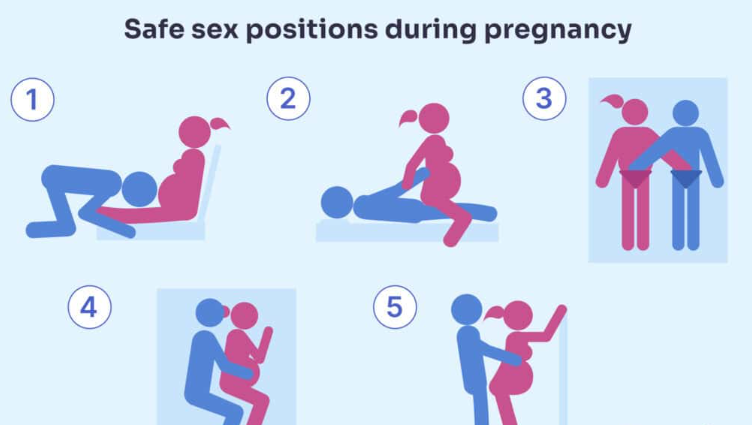
Comfortable Positions for Pregnant Women
As the belly grows, some positions become uncomfortable or impractical.
Generally Comfortable Options
Position | Why It Works |
Side-lying (spooning) | Both partners lie on their sides; minimal pressure on the belly |
Woman on top | Allows the pregnant partner to control depth and pressure |
Modified missionary | Partner on top but supporting weight on elbows; use pillows under hips/back |
Sitting positions | Pregnant partner sits on partner’s lap; good control and closeness |
Avoid positions that:
- Put direct pressure on the belly.
- Require lying flat on your back for long periods later in pregnancy (can cause dizziness for some).
Emotional Intimacy During Pregnancy
Pregnancy is not just physical; it’s emotional too.
What Many Women Feel
- More sensitive about body image changes.
- Worried about being a good mother.
- Emotionally vulnerable due to hormones and life changes.
What Many Partners Feel
- Excited but also anxious about responsibilities.
- Unsure how to support their pregnant partner.
- Conflicted between desire and fear of harming the baby.
How to Stay Connected
Open communication helps:
- Share fears and hopes honestly.
- Reassure each other of love and commitment.
- Agree on what kinds of intimacy feel good and safe at each stage.
Intimacy can include:
- Cuddling, hugging, holding hands.
- Gentle massage (with pregnancy-safe oils).
- Talking about your dreams for the baby and family.
- Non-penetrative sexual activities that feel safe for both.
Infection Safety and Condom Use
During pregnancy, protecting against infections is especially important:
- Some STIs can harm the baby or complicate delivery.
- New infections mid-pregnancy can be risky.
Consider using condoms if:
- Either partner has other sexual partners.
- There’s any risk of STI exposure.
- Your doctor advises extra caution.
Choose latex or non-latex condoms and use water-based lube to reduce friction and discomfort.
When to Call Your Doctor
Contact your healthcare provider if you experience:
- Vaginal bleeding after sex (more than light spotting).
- Leaking fluid (possible amniotic fluid).
- Regular, painful contractions after intimacy.
- Severe pain during or after sex.
- Unusual discharge, odor, or signs of infection.
- Decreased fetal movement after sex (once you’re feeling regular movements).
Your OB-GYN or midwife can assess whether everything is okay and give personalized advice.

Where Intimate Wellness Products Fit In
Some couples find that certain products can support comfort and connection during pregnancy:
- Water-based lubricants to reduce friction and discomfort (hormonal changes can cause dryness).
- Pregnancy-safe massage oils for gentle body massage and relaxation.
- Soft, body-safe vibrators for external stimulation if penetration is uncomfortable (always check with your doctor if you have any risk factors).
If you choose to use such products:
- Prioritize body-safe materials (medical-grade silicone, quality oils).
- Avoid anything scented, warming, or irritating near sensitive areas.
- Buy from reputable sellers with clear product information.
You can find a discreet, carefully selected range of lubes, massage oils, and gentle wellness products at YourWebsite.ph. These are meant to complement—not replace—your doctor’s advice and your mutual care as a couple.
Safety, Communication, and Love
For most Filipino couples with a normal pregnancy, sex is safe and can remain a meaningful part of your relationship. The key is:
- Listening to the pregnant partner’s body and comfort levels.
- Following your OB-GYN’s specific guidance for your pregnancy.
- Communicating openly about fears, desires, and boundaries.
- Embracing all forms of intimacy—sexual and non-sexual—as you prepare to welcome your baby.